Ammonia (NH3)
Clinical Biochemistry
Background Information
- Ammonia measurement is used in the diagnosis of Reye's syndrome (also request ALT), urea cycle defects and in coma or encephalitis associated with liver disease.
- The most common cause of high ammonia levels is artefactual effects, due to delay in processing the sample or from poor sample collection.
- Higher than normal ammonia levels may be seen in infection in neonates but levels greater than 200 µmol/L should always be considered as significant and require immediate attention.
- Any ammonia result greater than 150 µmol/L in children, or greater than 100 µmol/L in adults requires immediate attention.
- If high ammonia levels are found in neonates then an inborn error of metabolism should be considered, and appropriate further investigations instigated (see MetBioNet Guidelines).
Patient Preparation
No specific preparation is required
Sample Requirements
All samples for ammonia must be sent on ice immediately to the laboratory - see below for further details.
For adults, blood taken into a 4mL EDTA tube sent on ICE:
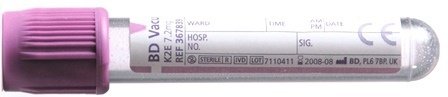
For children, blood taken into a 2mL EDTA tube sent on ICE:

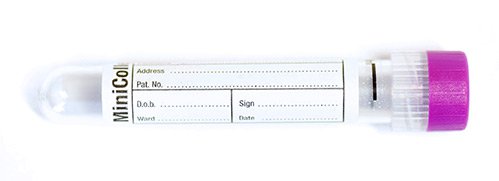
For neonates, blood taken into a 1.0mL minicollect EDTA tube sent on ICE:
Storage/Transport
Ammonia concentrations increase rapidly in blood after venepuncture so samples must be immediately placed on ice after labelling and sent to the laboratory within 20 minutes of venepuncture.
Inform the laboratory before the sample is taken so that analysis can be performed without delay.
Required Information
Relevant clinical details.
Turnaround Times
The assay is run throughout the day and night on receipt of a telephoned request.
The in-lab turnaround time is 4 hours. The test can be ordered as an urgent request.
Reference Ranges
| Age | Reference range (µmol/L) |
|---|---|
| 0 - 28 days | <100 |
| >28 days | <40 |
Further Information
To learn more about ammonia visit Lab Tests Online
For more information about the investigation of hyperammonaemia visit the MetBioNet Guidelines
Page last updated: 29/10/2025 | Page last reviewed: 29/10/2025